
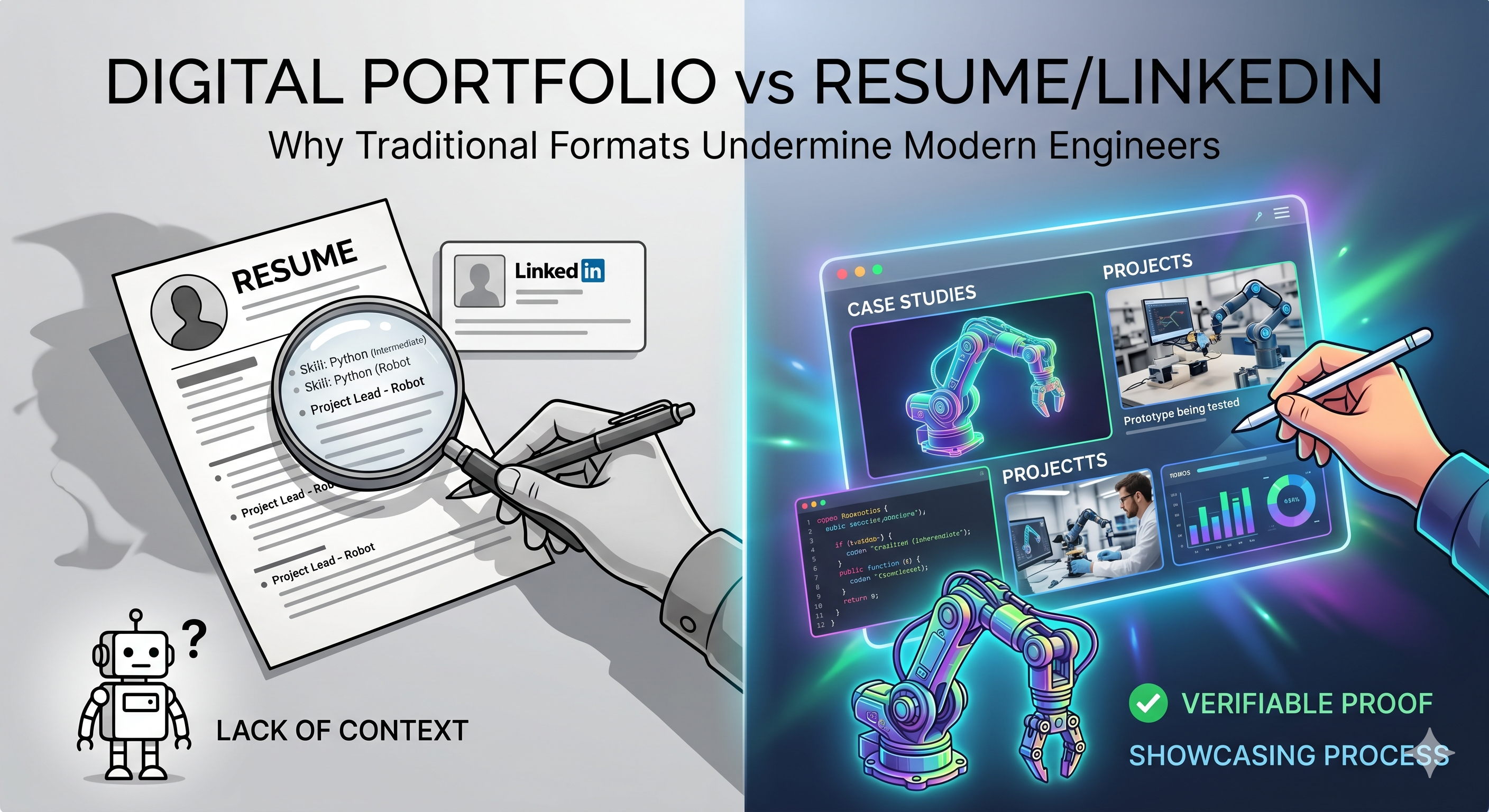
Today's engineering landscape demands more than a static LinkedIn profile or a traditional resume. The days of relying solely on third-party platforms are fading as more professionals recognize the transformative impact of creating a digital portfolio website. Understanding the nuances between a digital portfolio vs LinkedIn or a digital portfolio vs resume is now a critical strategy for career growth, robust networking, and personal brand authority.
The Limitations of LinkedIn and Traditional Resumes
While LinkedIn excels in professional networking, the platform imposes restrictions on how you express your technical abilities and creative engineering solutions. Resumes, though still required at times, condense years of diverse project work into a single bland sheet.
- Bullet-point summaries can never fully encapsulate your technical depth
- Recruiters see thousands of similar profiles daily, making it harder to stand out
- Design and branding options are inherently limited on LinkedIn and resumes
- You remain subject to platform algorithms and UI changes, risking lost opportunities
"Professionals who rely on generic platforms are often invisible among their peers. Owning your narrative means owning your tech future." — MettaByte
Advantages of a Portfolio Website Over LinkedIn
Ultimate Creative and Technical Control
Your custom portfolio website is the only place where you, the engineer, call every shot—from design elements that reflect your personal brand, to technical demonstrations, code embeds, animations, project case studies, and beyond. Here’s why it’s the best alternative to LinkedIn for professionals:
- Showcase depth and uniqueness — Go beyond brief summaries by hosting detailed, media-rich case studies.
- Full control over SEO and data — Rank for niche engineering skills on Google, not just inside LinkedIn’s silo.
- Interactive content — Embed live demos, technical diagrams, project repositories, and videos.
- No third-party constraints — You never worry about shifting algorithms, recommendations, or disappearing features.
Enabling Advanced Personal Brand Strategy for Engineers
What does it take to rise above generic profiles in modern engineering?
- Develop a coherent, memorable narrative that captures your journey
- Clearly highlight technologies, problem-solving style, and results
- Reinforce your expertise through engaging storytelling
- Showcase modern digital portfolio case studies that go beyond bullet points
This is how you improve personal branding online—by strategically positioning every element of your expertise for maximum impact.
Digital Portfolio vs Resume: Outshining the Old Guard
While the resume remains expected in applications, it cannot:
- Illustrate your growth across projects
- Demonstrate depth with multi-format content (GIFs, slides, code snippets)
- Provide real-time updates with a blog or news section
- Highlight endorsements, testimonials, or GitHub repo integrations
Engineers who build living digital portfolios multiply their visibility to recruiters, clients, and industry peers.
Why Build a Digital Portfolio Website in 2026?
The answer is competitive advantage. Today’s engineering firms and high-growth startups expect candidates to be creators, not just consumers of reputation systems. Here’s why:
- Recruiters increasingly Google candidates; those with professional, discoverable portfolio sites have the edge
- Self-hosted portfolios demonstrate technical initiative and web development skills directly
- Standout case studies can quickly go viral, attracting global attention and collaboration opportunities
Case Study: Modern Digital Portfolio Success
Consider a senior embedded systems engineer at MettaByte who struggled to attract US offers via LinkedIn alone. By launching a visually compelling portfolio website with:
- Interactive breakdowns of firmware design challenges
- Custom graphics demonstrating system architectures
- Testimonial videos from team leads
- Deep-dive technical blog posts with search-optimized content
The engineer’s search traffic, direct inquiries, and interview conversion rate grew threefold within months—a testament to the advantages of a portfolio website over LinkedIn.
How to Create a Compelling Portfolio Website
Professionals starting out often ask: what sets a standout portfolio apart?
Key Elements for Standout Digital Portfolios
- Hero Section: Introduce yourself with a crisp, branded message.
- Technical Skills Matrix: Use interactive filters or graphs.
- Case Studies: Detailed project narratives, not just screenshots.
- Integrated Blog: Authoritative engineering posts help with SEO and demonstrate thought leadership.
- Endorsements: Client or peer testimonials.
- Contact & Call-To-Action: Frictionless reach-out options.
Tips for Custom Portfolio Website Development
- Prioritize responsive design and performance for all devices
- Implement structured data (schema.org) for better Google indexing
- Leverage static-site frameworks (Next.js, Astro) for speed and SEO control
- Secure your site with HTTPS and privacy best practices
- Routinely showcase new work to keep the portfolio growing
By investing in custom portfolio website development, you show mastery over both content and underlying technology—a key differentiator for engineers.
Improve Personal Branding Online: Take Ownership
In a crowded field, only those who control and curate their stories succeed in standing out. Engineers who invest in digital portfolios set the pace for the next generation of innovators.
Summary:
- Digital portfolios offer creative and technical freedom unmatched by LinkedIn or resumes
- They serve as the best alternative to LinkedIn for professionals seeking impact
- Becoming the architect of your personal brand starts with launching your own portfolio site
Ready to outshine your competition? Start planning your portfolio journey with a partner who understands both engineering depth and the modern web. MettaByte specializes in taking your narrative beyond the expected—future-proofing your brand for the digital engineering marketplace.